Schools as Ecosystems, Not Islands
"Climate education is the manual for a generation’s survival"
India’s school system still carries the DNA of its colonial origins which are designed for scale and conformity rather than imagination and connection. We continue to see schools as self-contained instructional spaces, separate from society, rather than as living parts of a shared ecosystem.
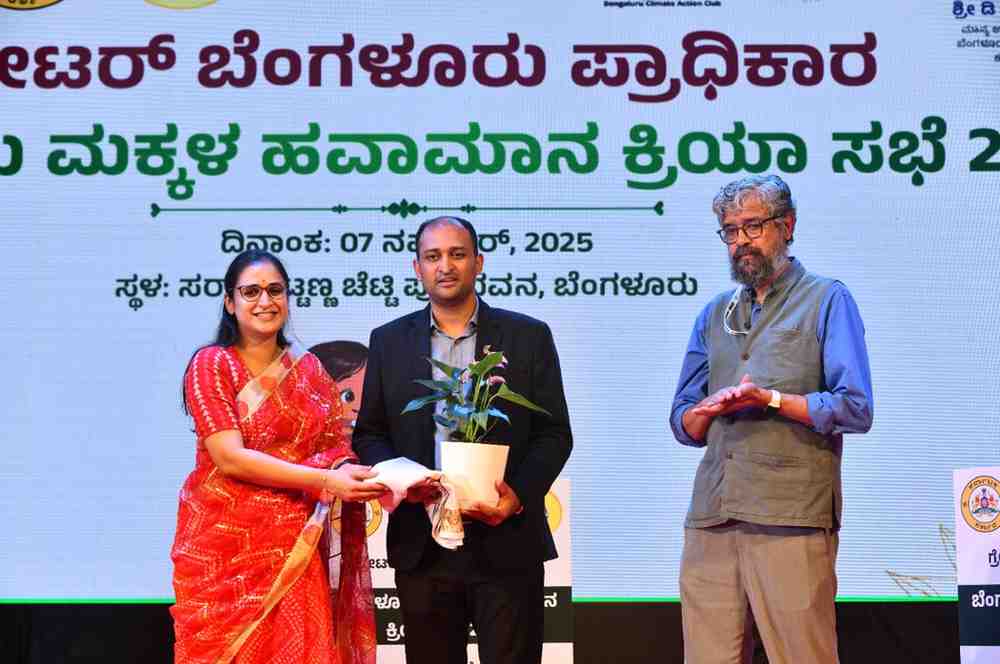
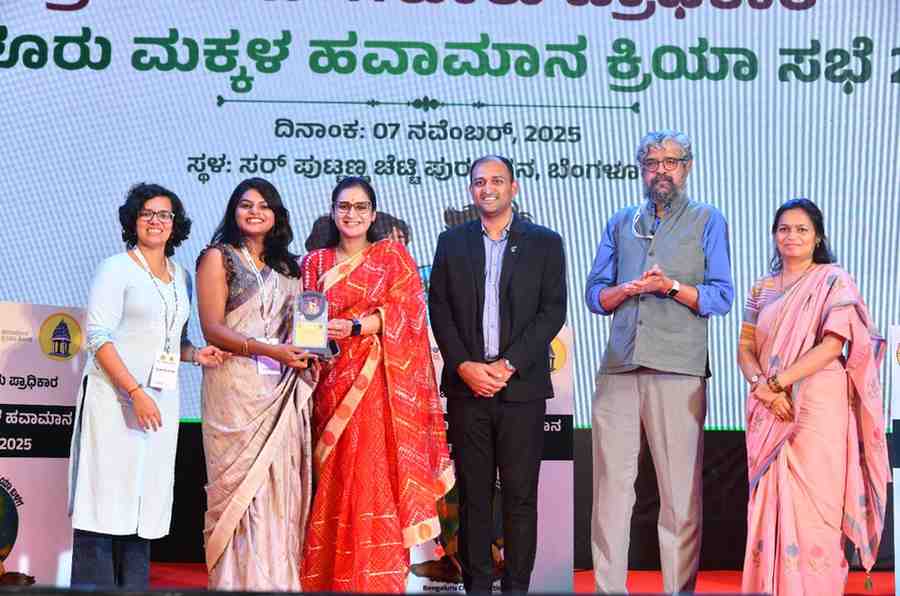
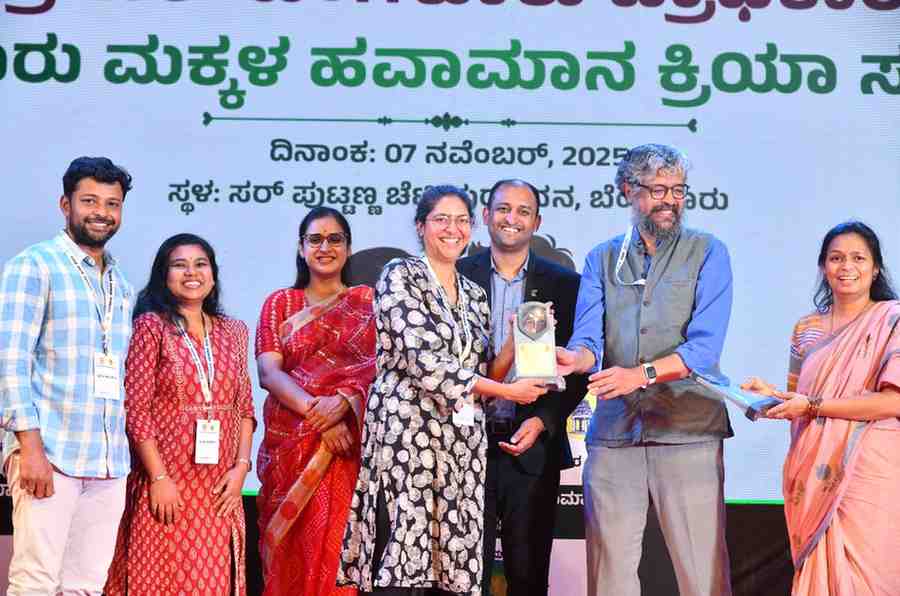
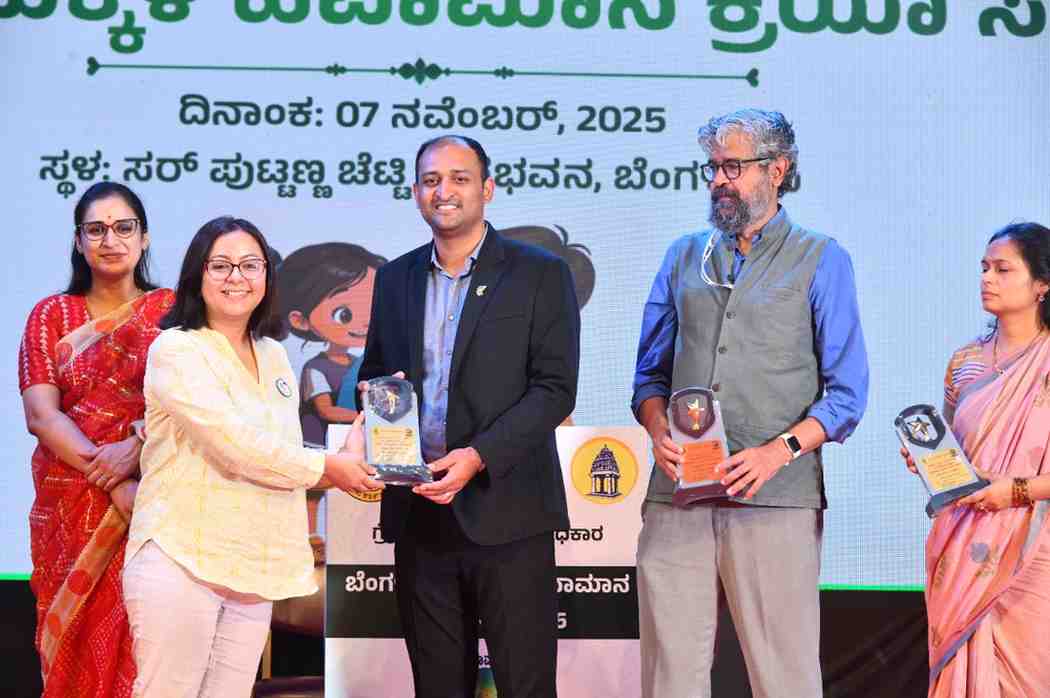
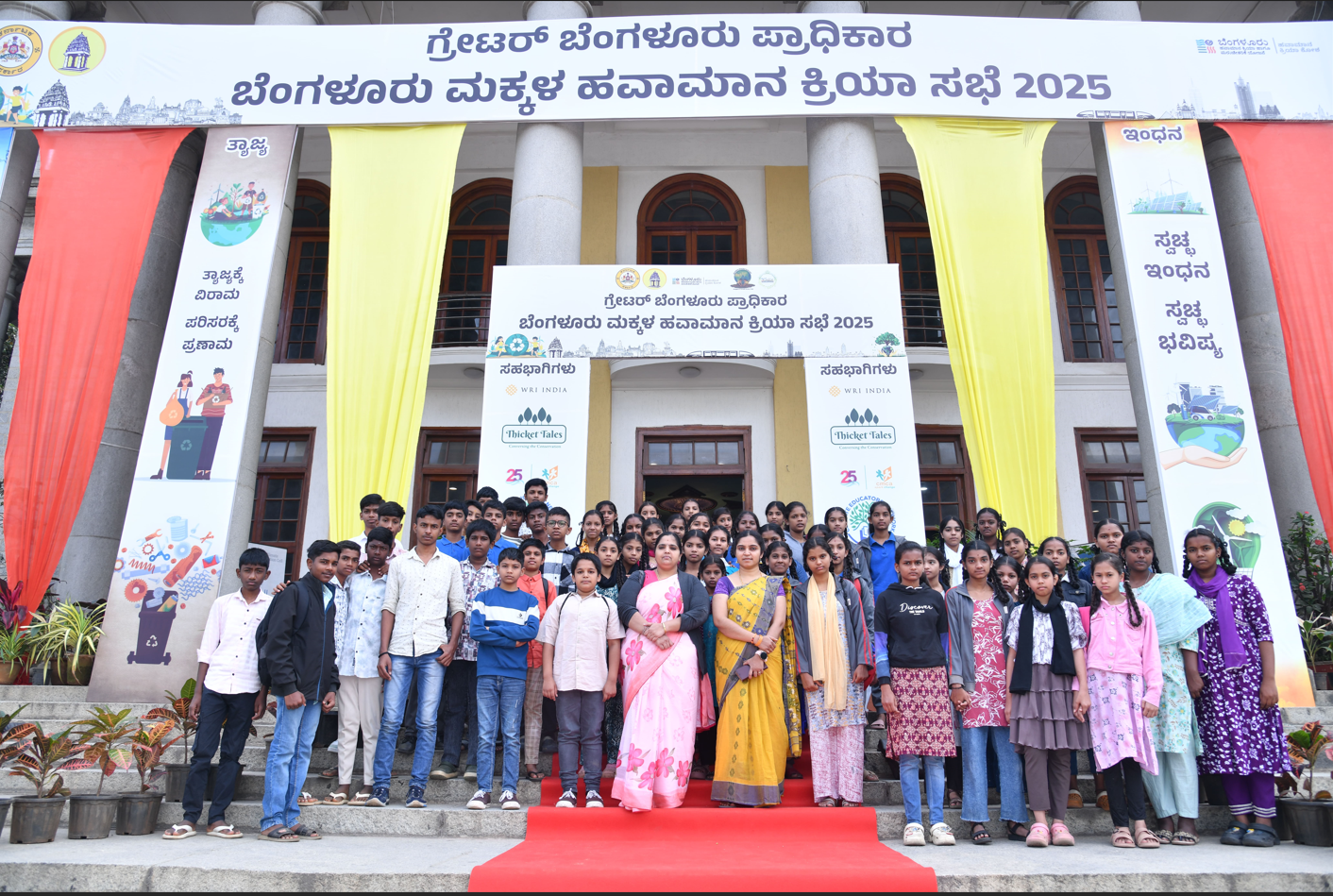
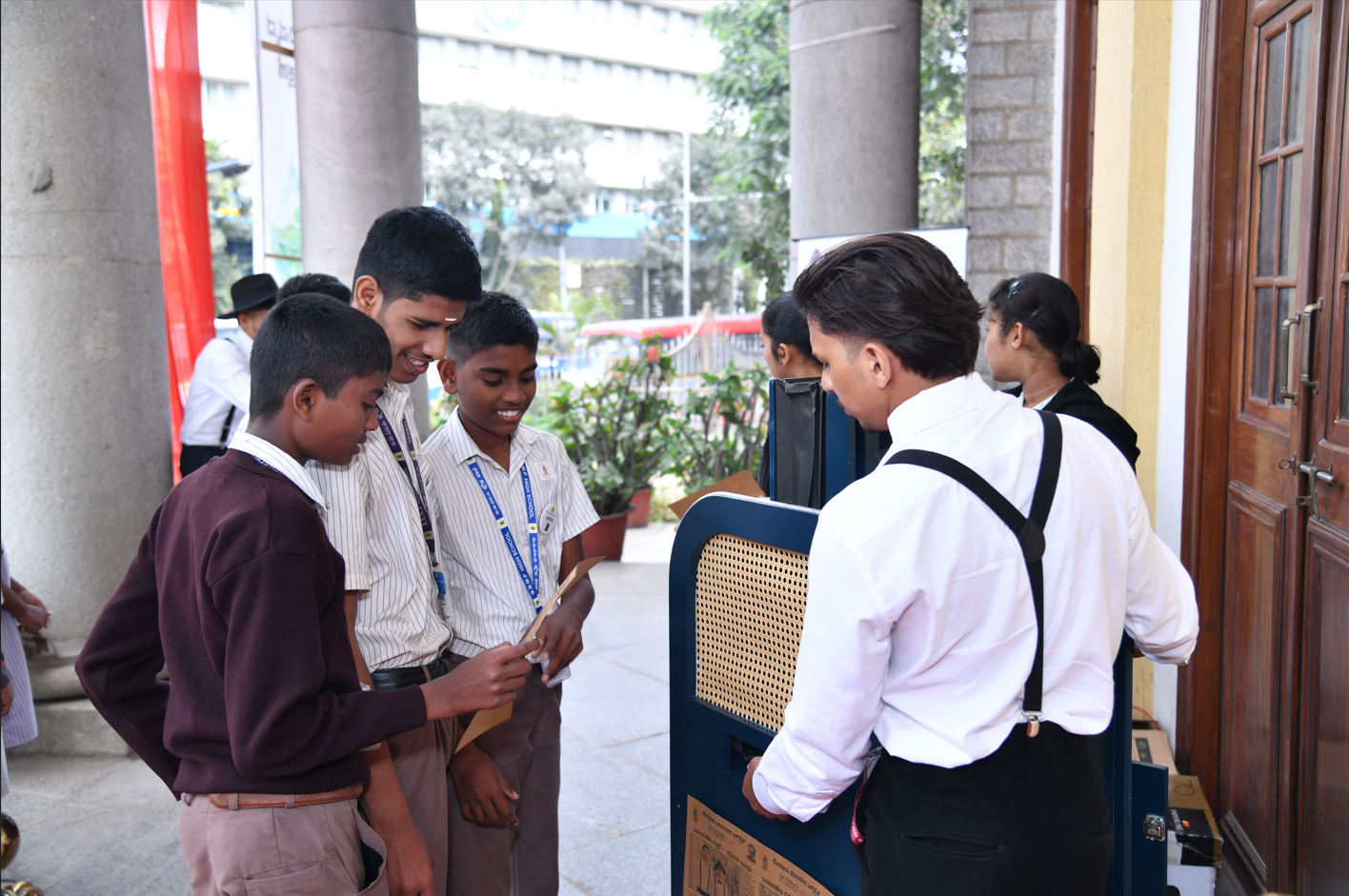
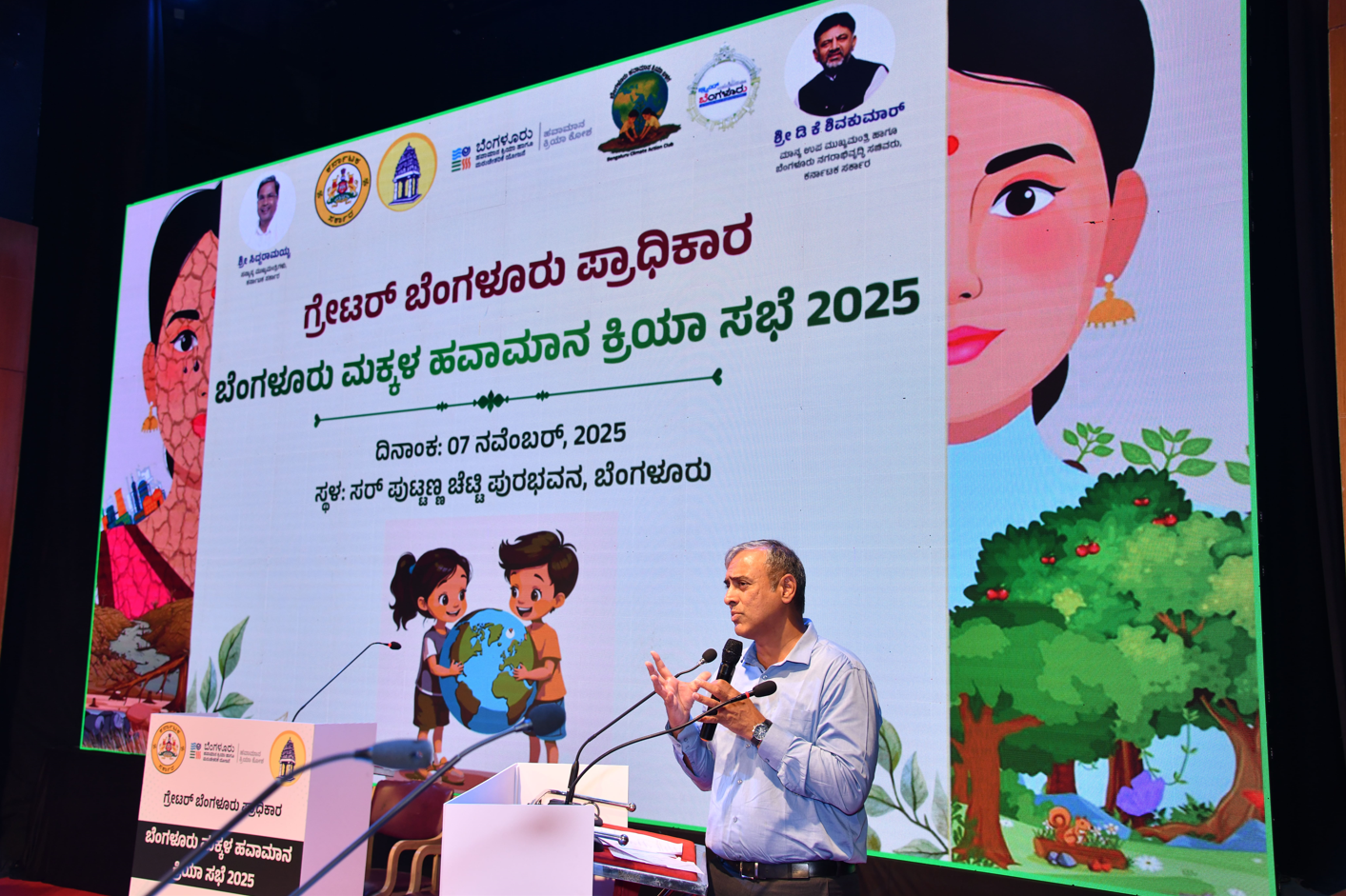
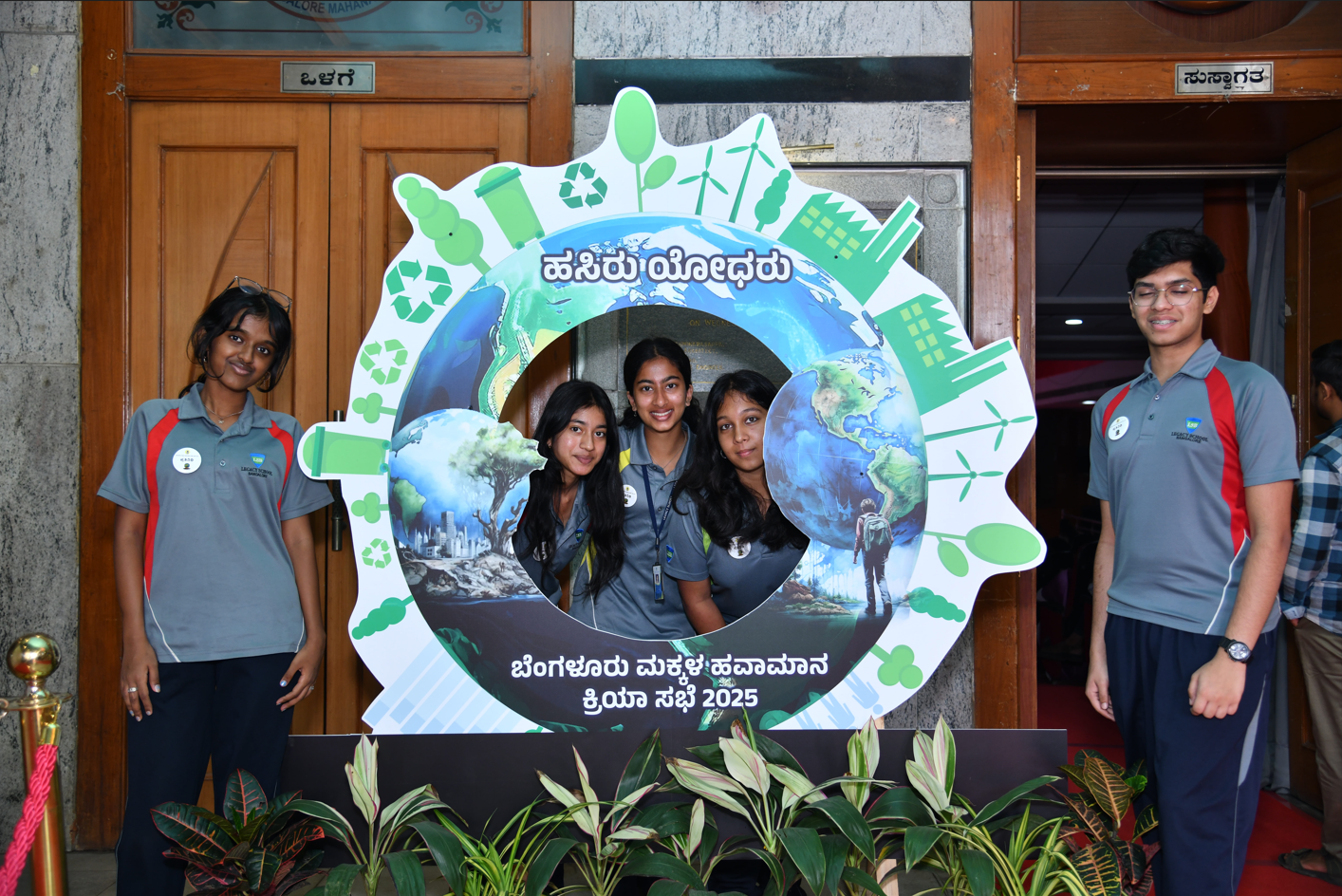
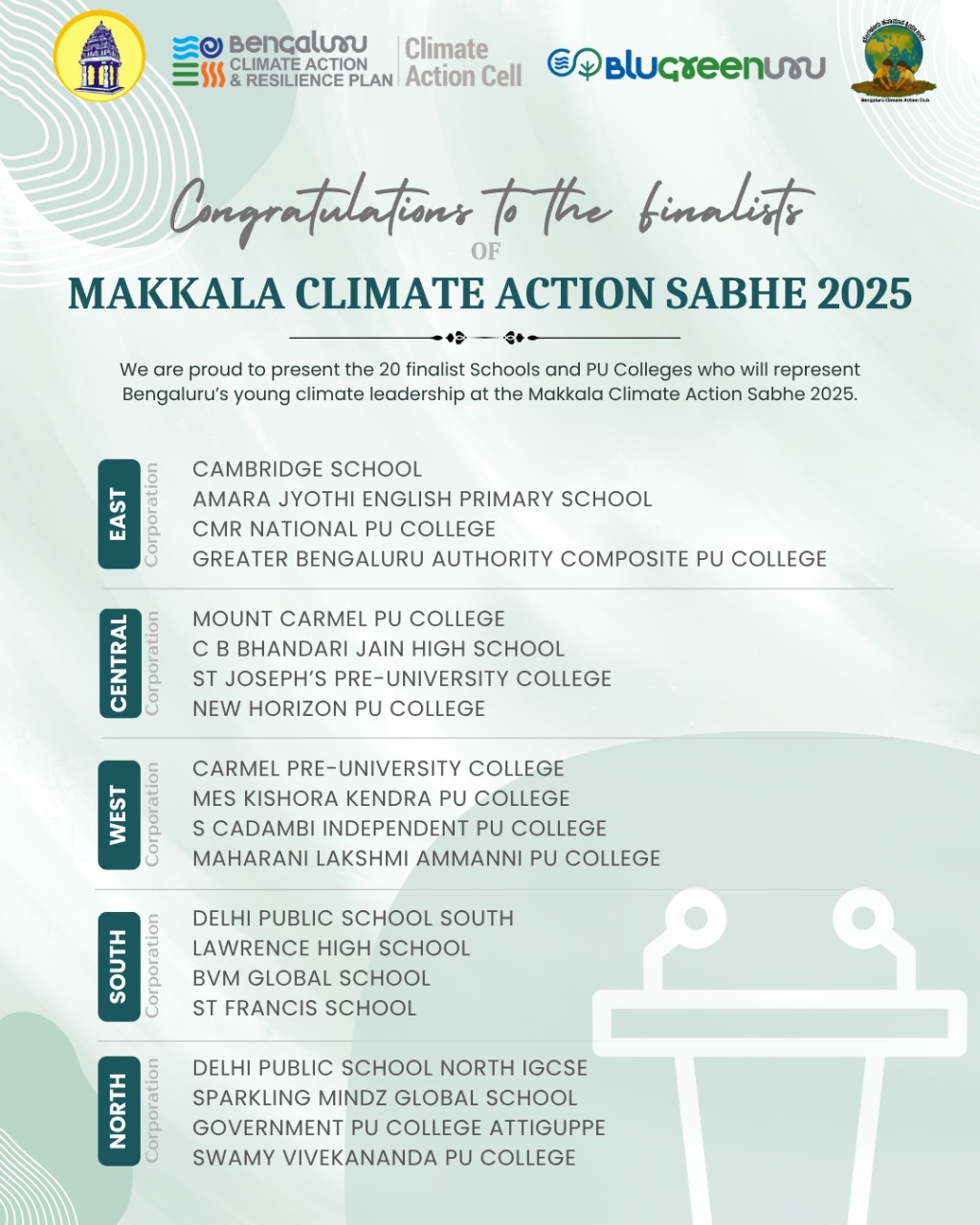
Climate education challenges this separation. It invites children, teachers, and communities to see learning as part of the city’s life and to understand that the health of a classroom, the city and the planet are not disconnected. The Sabha became an opportunity for professionals to lend their skills in supporting the participants. Public speakers, radio jockeys, social media influencers, domain experts and teachers all had a crucial role to play in training, guiding and supporting the students through the event. Interaction with professional experts and policy makers in the lead up to the event brought home the idea that it takes a village and a community to create conditions for our children to thrive. As eloquently put by one of the teams Climate action should be a culture, not a subject.
Channeling the energy of young minds
"We need to sharpen minds, not axes"
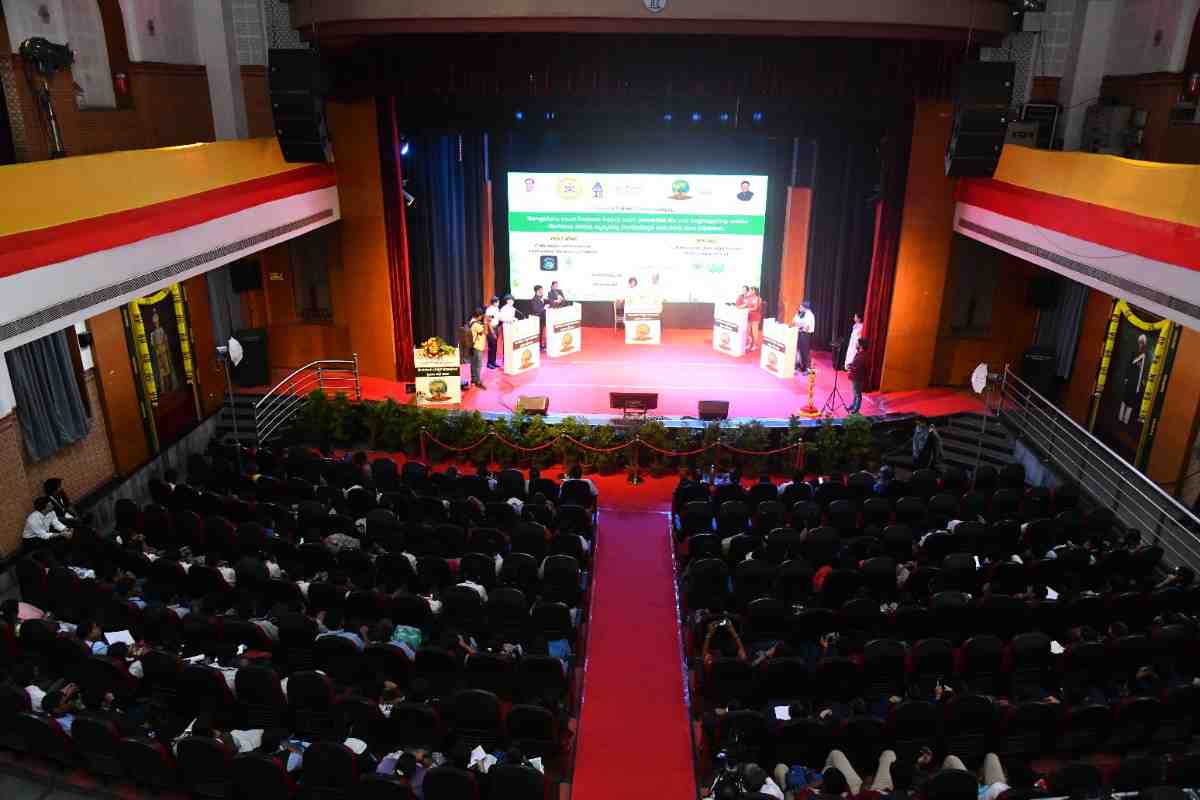
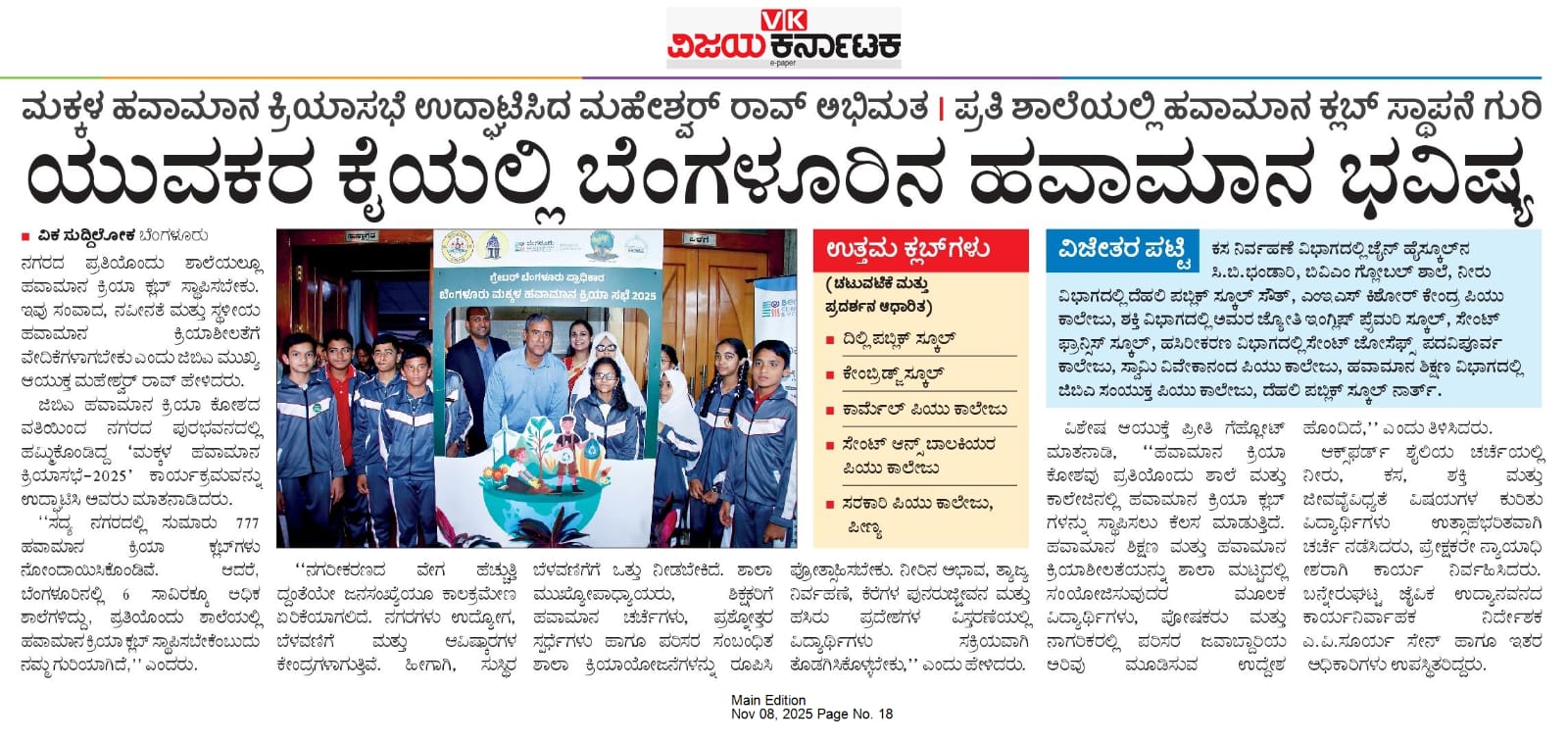
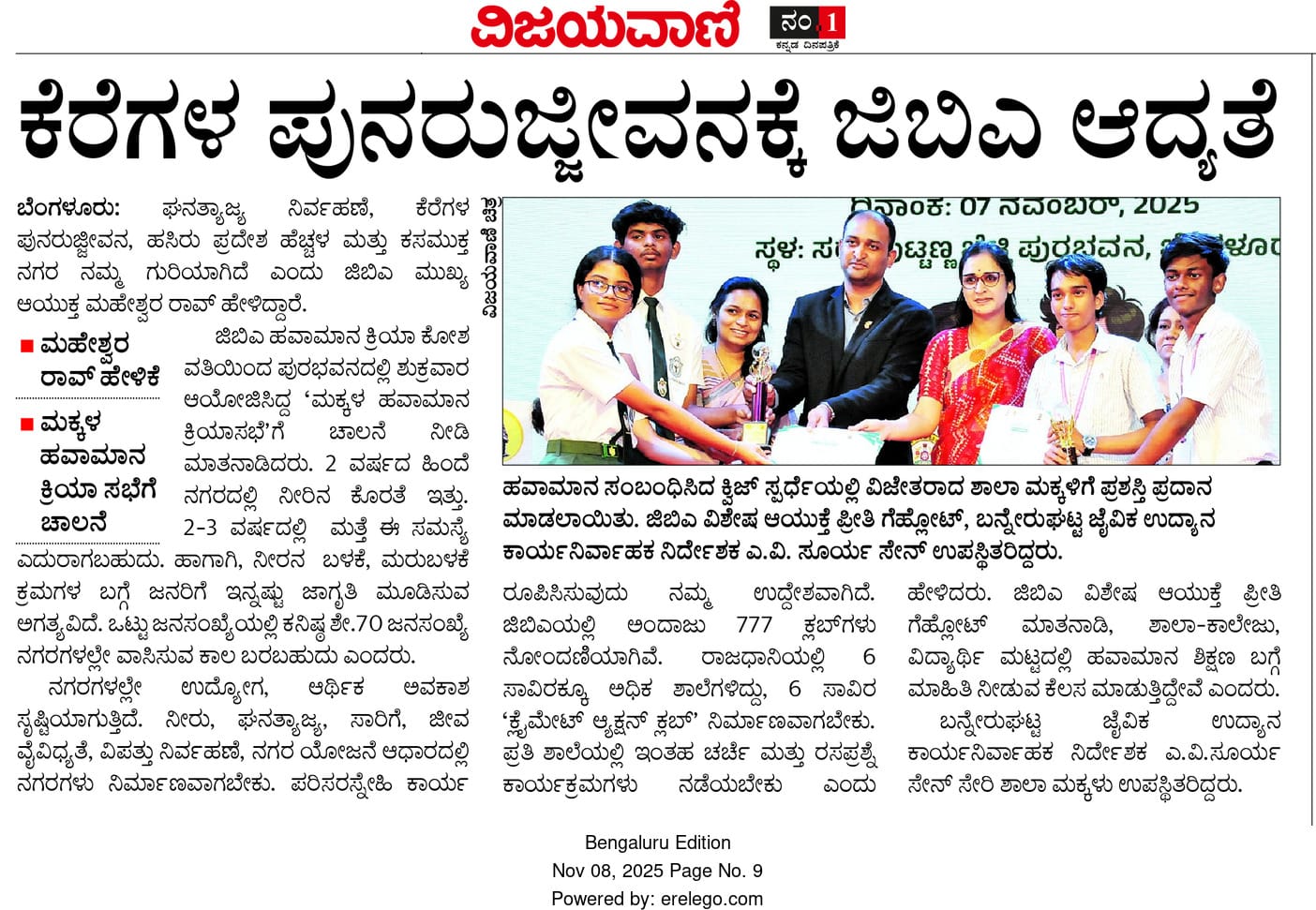
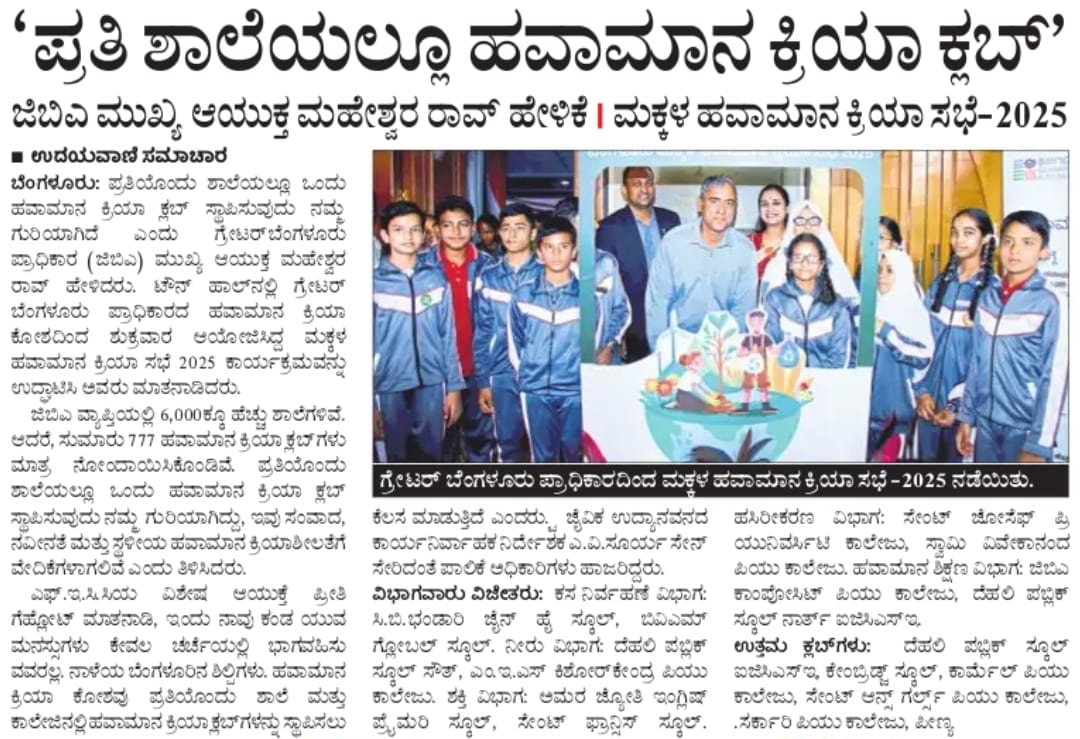
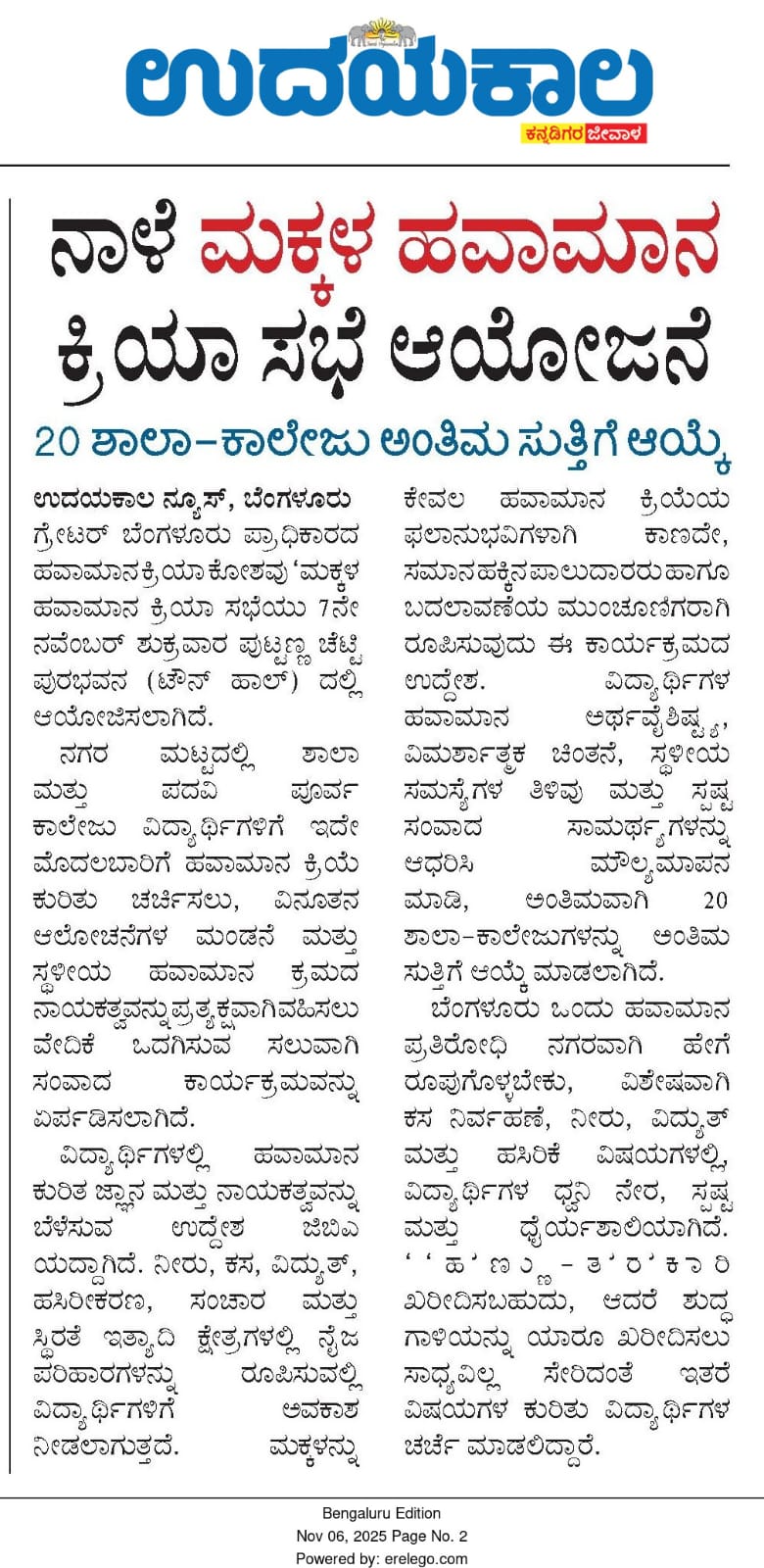
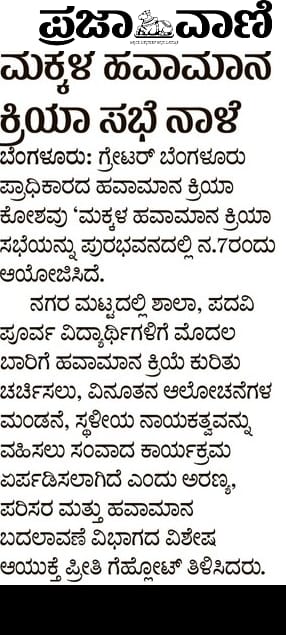
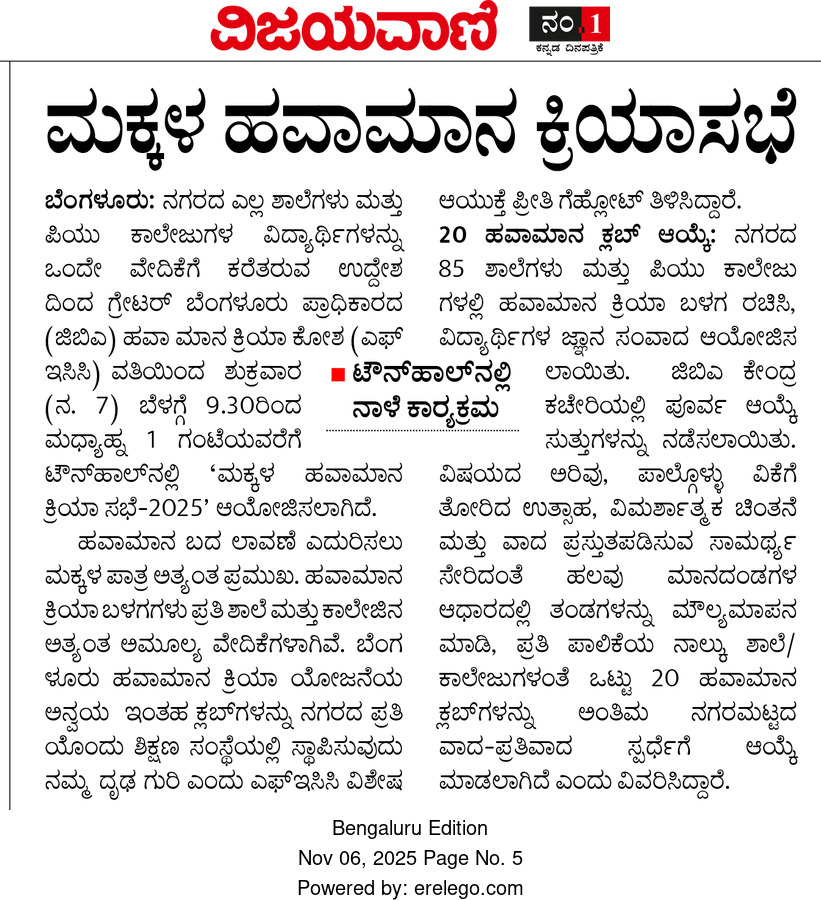
When we launched the Climate Action Clubs in July, the goal was modest: create a platform where students could learn about local climate issues and act together. Three months later, the Makkale Sabhe revealed the creativity, urgency, and clarity with which young people understand the climate crisis.
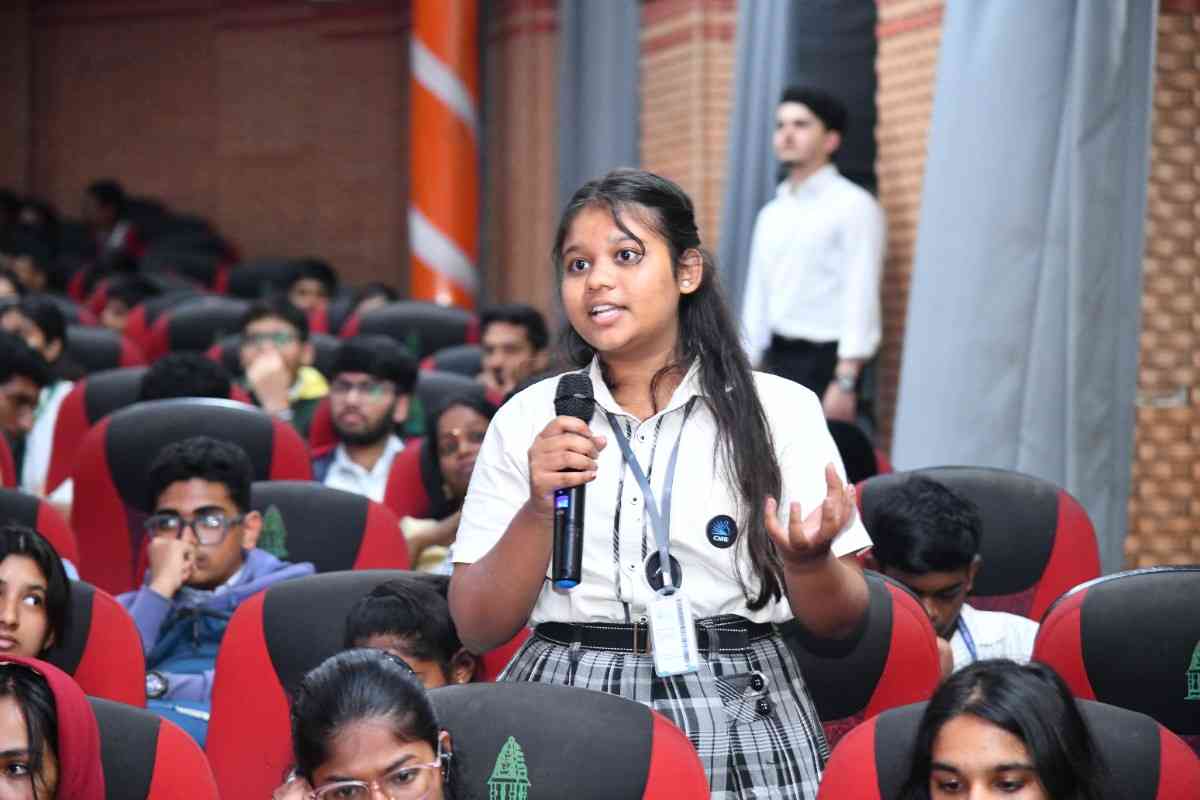
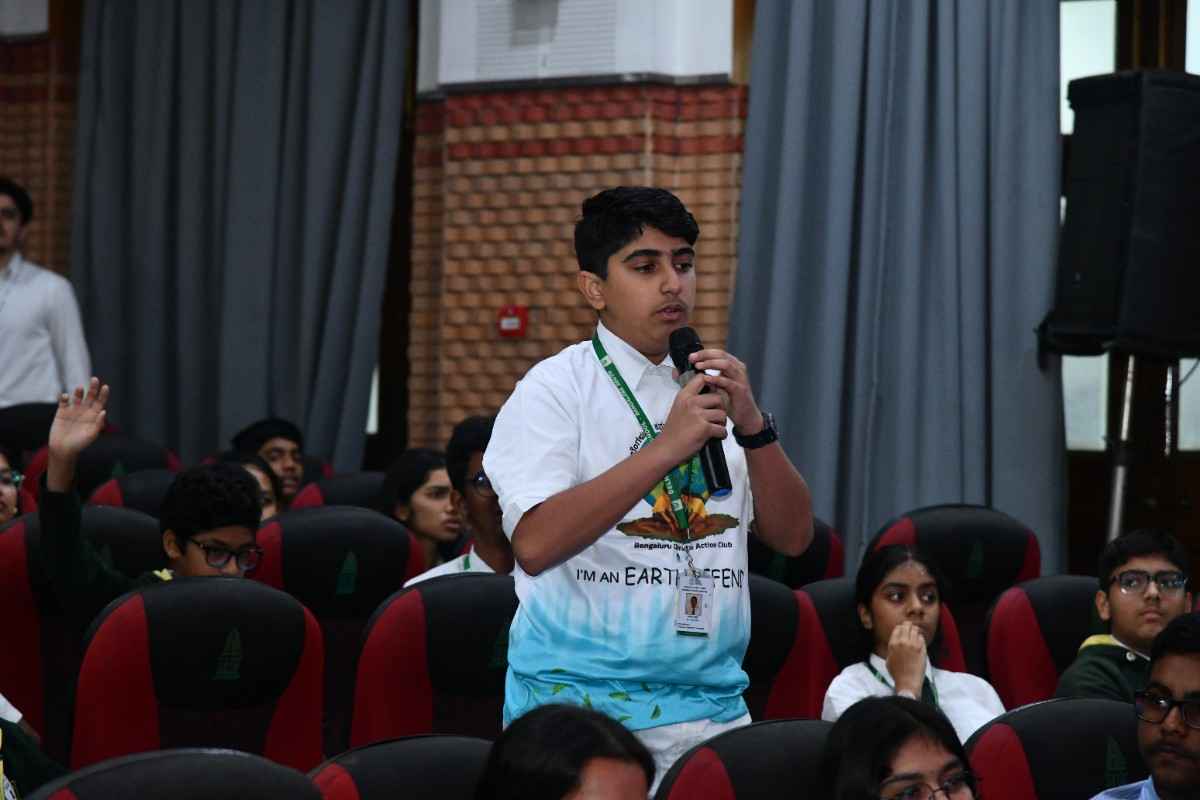
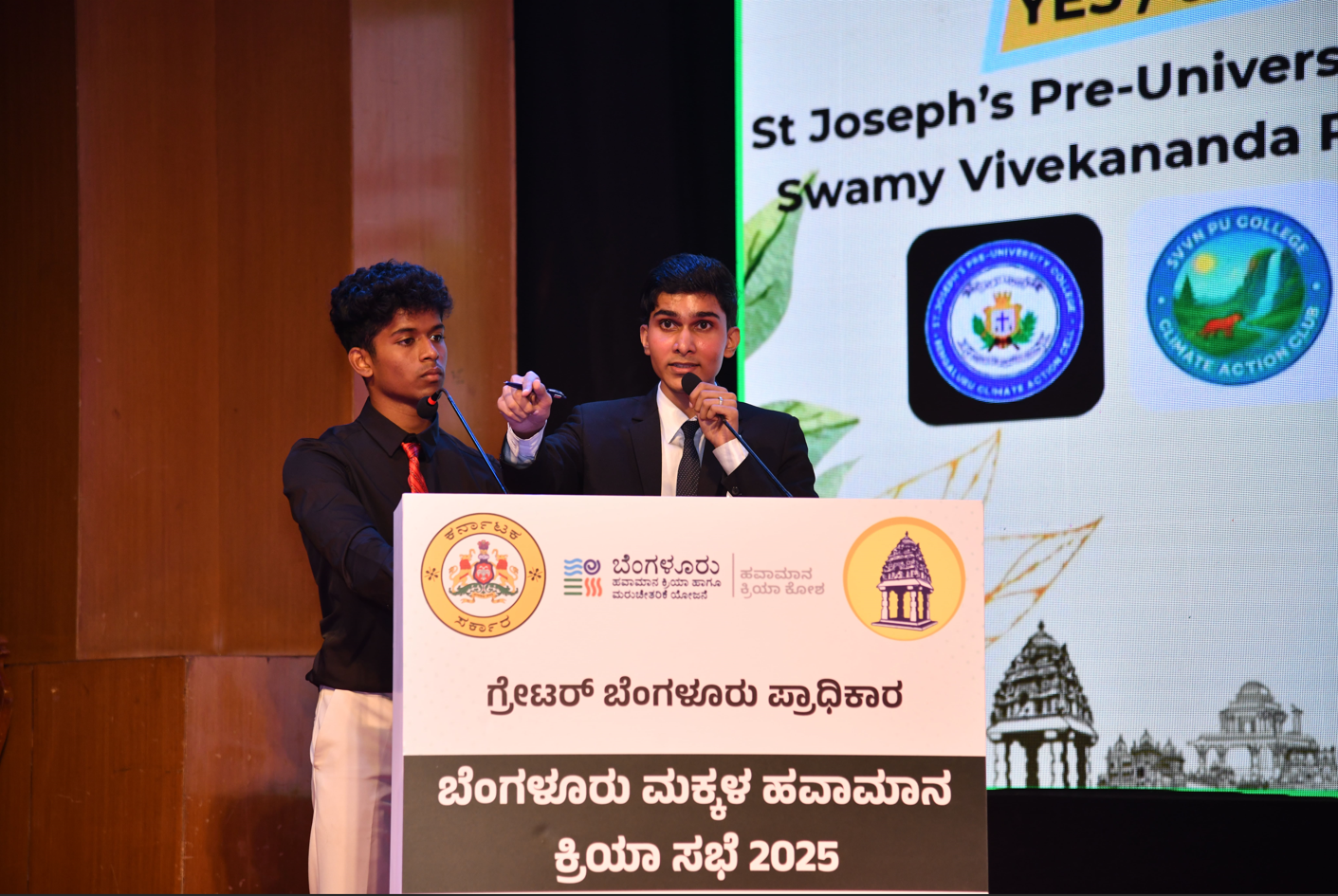
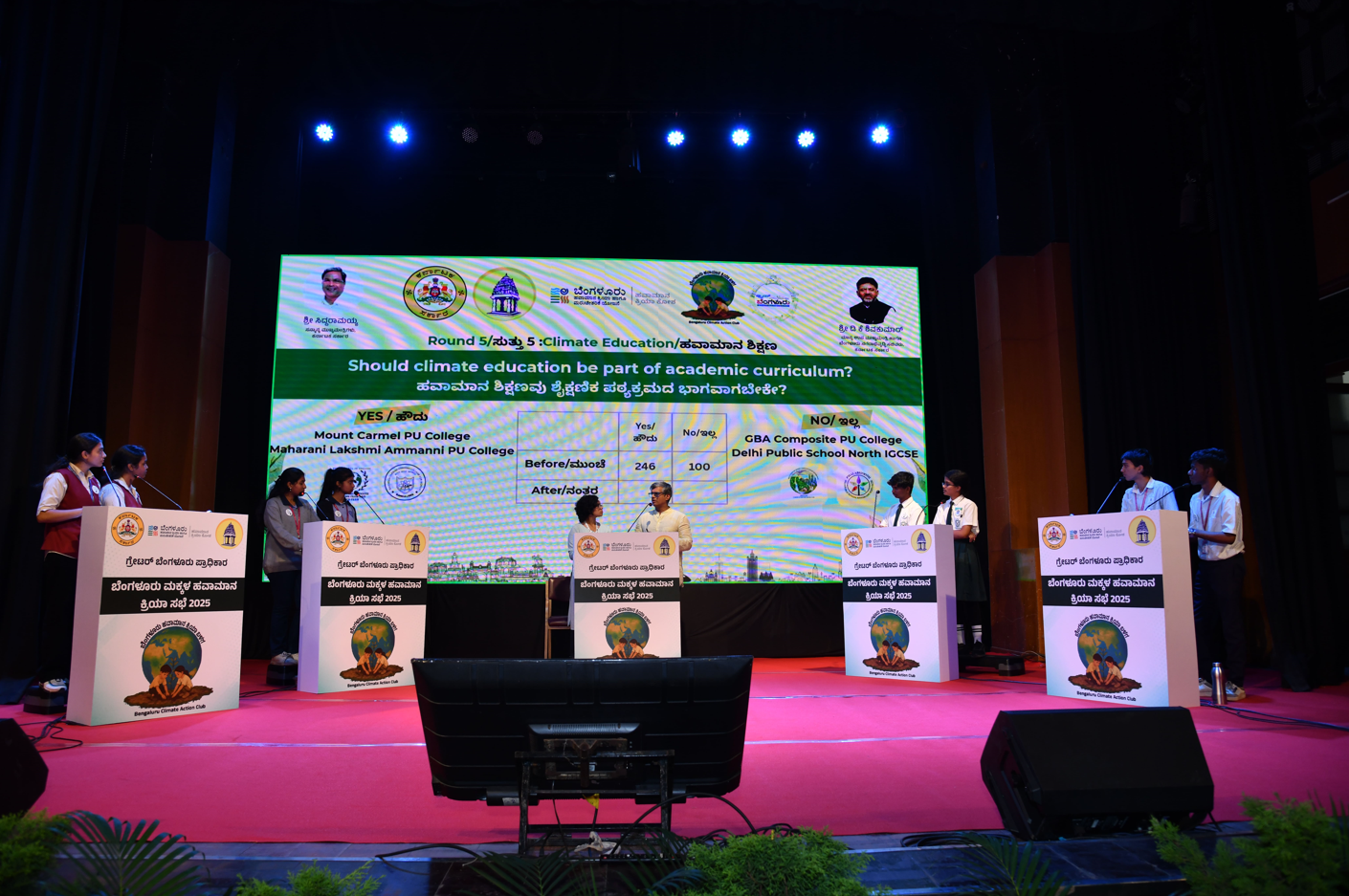
Even if adults are divided or fatigued, children see clearly. "You can paint a coal plant green, but it will still pollute the same!" said a student arguing against the motion “EVs are better than ICE (petrol) vehicles in combating climate change”
Their debates were not only informed but infused with empathy, equity and practicality, qualities that have long been missing in policy conversations. At the rehearsal debate for instance, where they argued against the motion, ‘Bengaluru must impose heavy cash penalties for not segregating waste’, one participant simply stated - "let’s focus on fairness, not finance"
Through the Climate Action Clubs, we are learning that the real work of climate education is not teaching children “what to think,” but enabling them to connect, deliberate, and design ideas for action. What the Makkala Sabhe demonstrated is that climate resilience begins in imagination which needs the right conditions to thrive. For this, they need an ecosystem not a syllabus. Whether you are a parent, professional, policymaker, artist, or educator, you have a role to play in supporting the skills, values, and creative negotiations that this generation is beginning to model for us.
Building the Conditions for Creative Climate Resilience
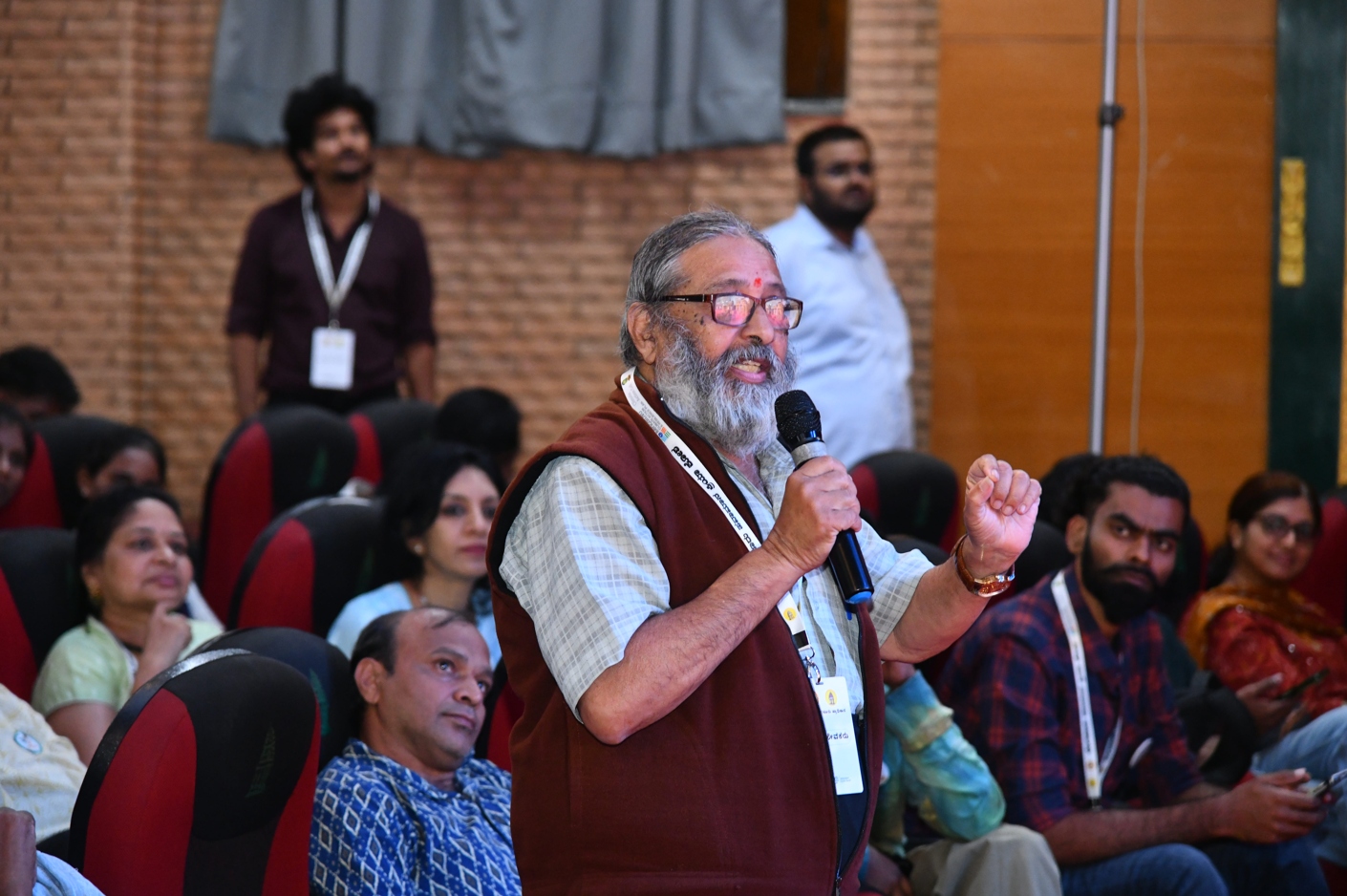
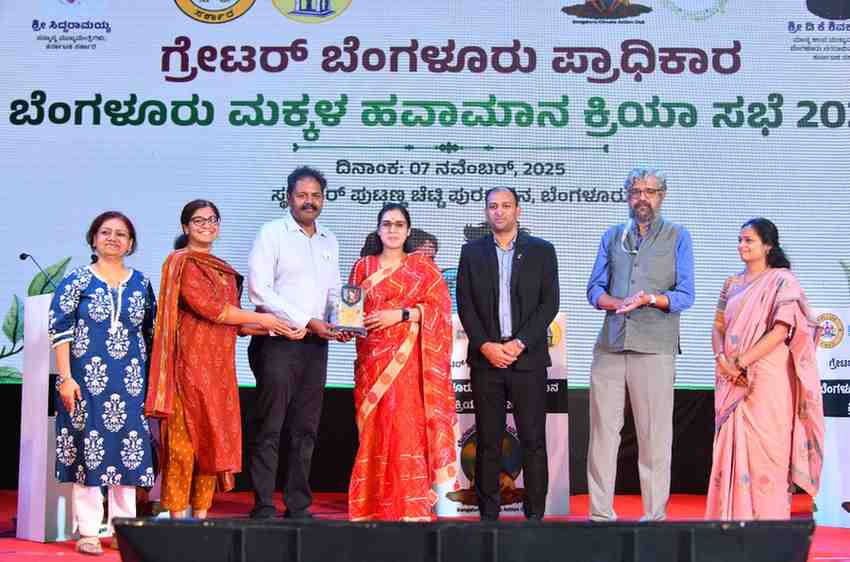
This climate action clubs program grew from a collaboration between the Climate Educator Network, the Bengaluru Climate Action Cell, BBMP, WRI, CMCA and Thicket tales. Collaboration is a central value of the program and creating collective learning is impossible without it. What students demonstrated is that with the tools, inputs and support, they are reflective about their roles and possibilities. What both the process and event highlighted, by the array of experts, policymakers, practitioners, parents and educators involved, was the important role that diverse individuals play in building collective societal learning.
"Those who say individuals cannot prevent deforestation have never heard of chipko movement!!" – said a student arguing against the motion of “cutting trees for infrastructure is a necessary evil for development”
Conclusion: From Awareness to Agency
The climate action clubs program is working to create enabling conditions by connecting teachers, schools, researchers, practitioners and local state institutions so that climate education doesn’t remain an extracurricular activity, but becomes part of how cities learn.
The Makkale Sabhe is not the culmination of this process but its beginning. It has shown us that children are ready to act, deliberate, and lead. The question now is whether we, as adults, can collaborate to build the scaffolding - the trust, resources, skills, opportunities and spaces to sustain their energy.
As one participant aptly put it - “We are not asking for more homework, we are asking for more hope.”
Dr. Sunayana Ganguly - Founder and Director, Climate Educators Network